
Invasive Plants in the Pacific Northwest
We often find ourselves pulling weeds in our yards, but we’ve thought there are no weeds in the forest. Wikipedia defines a weed as a plant considered undesirable in a particular situation. However, invasive weeds are everywhere, whether in forests or yards. They can outcompete native species, suffocate trees, or even wetlands and aquatic environments.
As a park steward, I battle invasive species and help reforest urban parks, saving the remaining forest. Invasive species decrease biodiversity, making forests weaker. When there’s more biodiversity, forests have a higher chance of surviving a variety of species. If one tree type fails, there’s always a backup. Invasive plants eliminate this, quickly consuming native vegetation and replacing it with themselves.
Billions of dollars are spent yearly on controlling invasive species through herbicides, physical removal, and other methods. Aquatic invasive plants clog water drainage infrastructure, costing public works departments time and money to remove them. Invasive species also interfere with agriculture, making it difficult for farmers to grow crops.
There are three main categories of invasive plants in Washington state:
Class A: non-native species that are so limited, they are required to be removed before they completely spread out.
Class B: non-native species that are in limited areas of Washington state.
Class C: invasive weeds that have significantly more population and are more widespread.
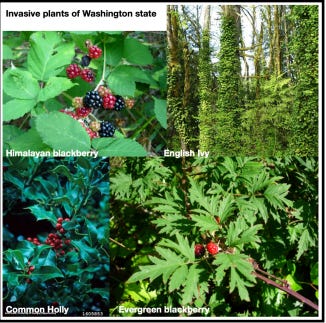
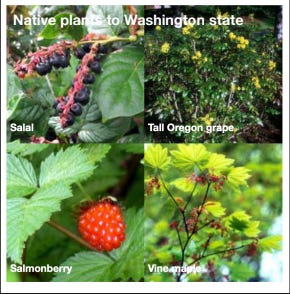
These plants can have thousands of seeds at a time, spreading by wind or birds, making them easy to spread into yards and parks. Many invasive plants include Himalayan Blackberry, English Ivy, Evergreen Blackberry, and Common Holly. They take over native forests, including big trees like Western Red Cedar, Western Hemlock, and Douglas Fir, and small plants like Salmonberry, Salal, and Western Swordfern.
If you are planning to plant new plants in your yard, make sure to include some native ones! Native plants, because they have been established in the area for so long, are very efficient at water usage, reducing maintenance. They prevent erosion and provide food for many different species, like birds, bugs, and other animals. They can also be a great place for pollinators!
Help Us Out!
When hiking on trails, make sure that your clothing is free of any seeds, and if you have a boat of any kind, remember to remove any aquatic plant that you see before moving it.
Need help controlling invasive species?
With over 6 years of experience removing/controlling invasive a species. Whether it’s using herbicide or physically, removing the roots. Check out Micah meticulous mowing for more details.
Volunteer to Control Invasive Species
There are many organizations to help remove invasive species.
Green Kirkland Partnership
Earth Corps volunteering
Green Seattle Partnership
Forterra
Sources
https://kingcounty.gov/en/dept/dnrp/nature-recreation/environment-ecology-conservation/
noxious-weeds
https://extension.wsu.edu/invasive-species/intro/
Native plants to Washington state
https://www.usda.gov/about-usda/general-information/initiatives-and-highlighted-programs/
peoples-garden/gardening-advice/why-native-species-matter
https://www.wnps.org/invasive-species
Invasive plants to Washington photos:
https://www.nwcb.wa.gov/weeds/evergreen-blackberry
Native plants to Washington photos:
https://green2.kingcounty.gov/gonative/Plant.aspx?Act=view&PlantID=47